
Mold Assessment in Coral Gables Houses Built Before 1960
An assessment tells a Coral Gables owner how far the growth runs, which path the water took through an older house to reach it, and what a removal would need to include, in writing.
Mold Assessment quote in Coral Gables
Tell us what you can see or smell, where it is, and whether it is a condo or a house. Those three answers decide who you need and who is likely responsible, which matters more here than the size of the stain.
Would you rather talk it through? Call (315) 640-3590.
$100 off your first job
Credited by us on your first booked job.
- One credit per customer per property, on your first booked job.
- Valid through December 31, 2026.
Mention this offer when you book. Full terms.
Coral Gables housing age and elevation history, sourced
Coral Gables has 22,020 housing units in the ACS 2020 to 2024 estimates. 9.9 percent were built in 1939 or earlier and 36.6 percent before 1960, the oldest shares among the places on this site. 49.7 percent are single-family detached, 33.1 percent are in buildings of 20 or more units, and 64.5 percent of occupied units are owner occupied.
Source: US Census Bureau, American Community Survey 2020 to 2024 5-year estimates, table DP04 Selected Housing Characteristics, Coral Gables city, Florida, accessed 2026-09-23
The Local Mitigation Strategy counts 45 residential repetitive loss properties in Coral Gables in 2024. Of 20,553 buildings mapped in the city, 4,456, about 22 percent, are in special flood hazard zones AE, AH or VE, including 65 in the coastal VE zone. Its Table 7 counts 7,094 residential structures in Coral Gables built before 1957, when no special elevation requirements were in effect.
Source: Miami-Dade County Local Mitigation Strategy, Part 5: NFIP and CRS (September 2025), Tables 8 and 12, accessed 2026-09-23
EPA: 'In most cases, if visible mold growth is present, sampling is unnecessary. Since no EPA or other federal limits have been set for mold or mold spores, sampling cannot be used to check a building's compliance with federal mold standards.'
Source: US Environmental Protection Agency, A Brief Guide to Mold, Moisture and Your Home, accessed 2026-09-23
Section 468.8419(1)(d) says a person may not 'perform or offer to perform any mold remediation to a structure on which the mold assessor or the mold assessor's company provided a mold assessment within the last 12 months.' Section 468.8419(2)(d) is the mirror rule, barring a remediator from assessing a structure it remediated within the last 12 months. Under 468.8419(3) a violation is a second degree misdemeanor the first time, a first degree misdemeanor the second time and a third degree felony after that.
Source: The Florida Senate, 2025 Florida Statutes, Chapter 468 Part XVI, section 468.8419 Prohibitions; penalties, accessed 2026-09-23
Tracing water through an older Coral Gables house
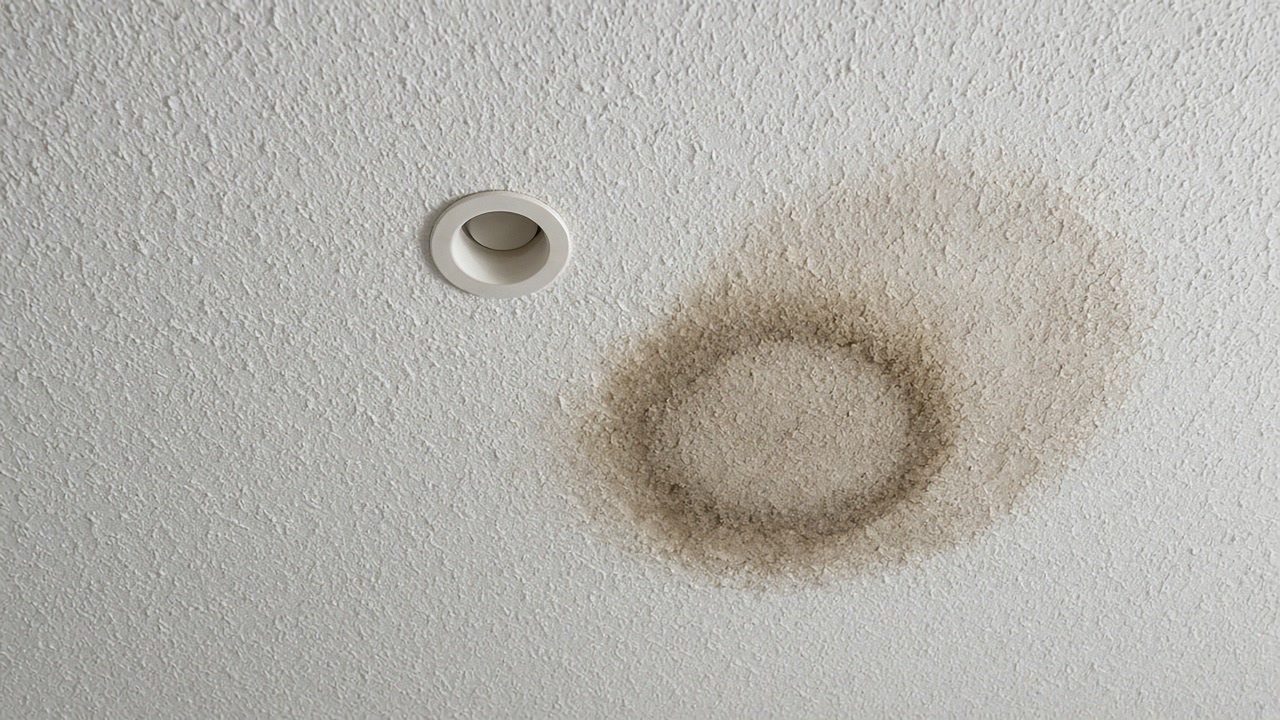
Coral Gables has the oldest housing among the places on this site: 9.9 percent of units were built in 1939 or earlier and 36.6 percent before 1960. In houses that age, water rarely takes a direct route. It can enter at a roof valley and appear two rooms away, run behind a window frame set into masonry, or rise at the floor of a house built before 1957, when no special elevation requirement applied; the county plan counts 7,094 such homes in the city. The assessment should map the moisture outward from the stain until it finds where the path begins, and put that path on paper.
What to tell a Coral Gables assessor about the house's age
Spend the fee on the source, not on a sample. EPA says that where mold is visible, sampling is in most cases unnecessary, and there are no federal limits to compare a result against. Tell the assessor the house's age and any past roof, window or plumbing work, and ask for a report that names the entry point, the path and the extent. That report is what a separate remediator prices, because Florida bars the assessing company from remediating the same structure within 12 months. If the path turns out to be the roof, the roofer comes before anyone else.
The house's age and past repairs
Before 1940, before 1957 or later, and what has been redone. Each changes where the assessor looks first.
Whether the report names an entry point
A report that maps the stain but not the path leaves the expensive question open.
Whether a lab result is needed
Rarely, where growth is visible. Readings and photographs carry the report.
Is the Coral Gables stain far from any pipe?
Tell us where it is, what is above it and roughly when the house was built.
Other Coral Gables work: drying
Coral Gables questions about hidden water paths
The stain in my Coral Gables house is nowhere near a pipe. Where could the water come from?
In an older house, often from above or from outside: a roof valley, flashing, a window set into masonry, or rain running down inside a wall. Moisture mapping from the stain outward is how the assessor finds the start of that path.
My Coral Gables condo is in a newer tower. Is this page for me?
About a third of Coral Gables housing is in buildings of 20 or more units, and there the source is more often the unit above or a shared line. The assessment is the same in principle, but it will need the association's help to reach the source, so tell the manager before the visit.
Send the Coral Gables house and the stain
A person reads it and writes back with where the assessor should start, and nobody chases you afterward.