
Is a Mold Assessor Worth Paying for What You Can Already See?
Often not: for visible mold covering about 10 square feet or less, EPA says most people can handle the job themselves and that sampling visible growth is usually unnecessary. A written assessment earns its fee when the source is hidden, the area is larger, or someone else, a condo association, a buyer or an insurer, will rely on the finding.
Already know you need someone out? Call (315) 640-3590.
What EPA says about testing mold you can already see
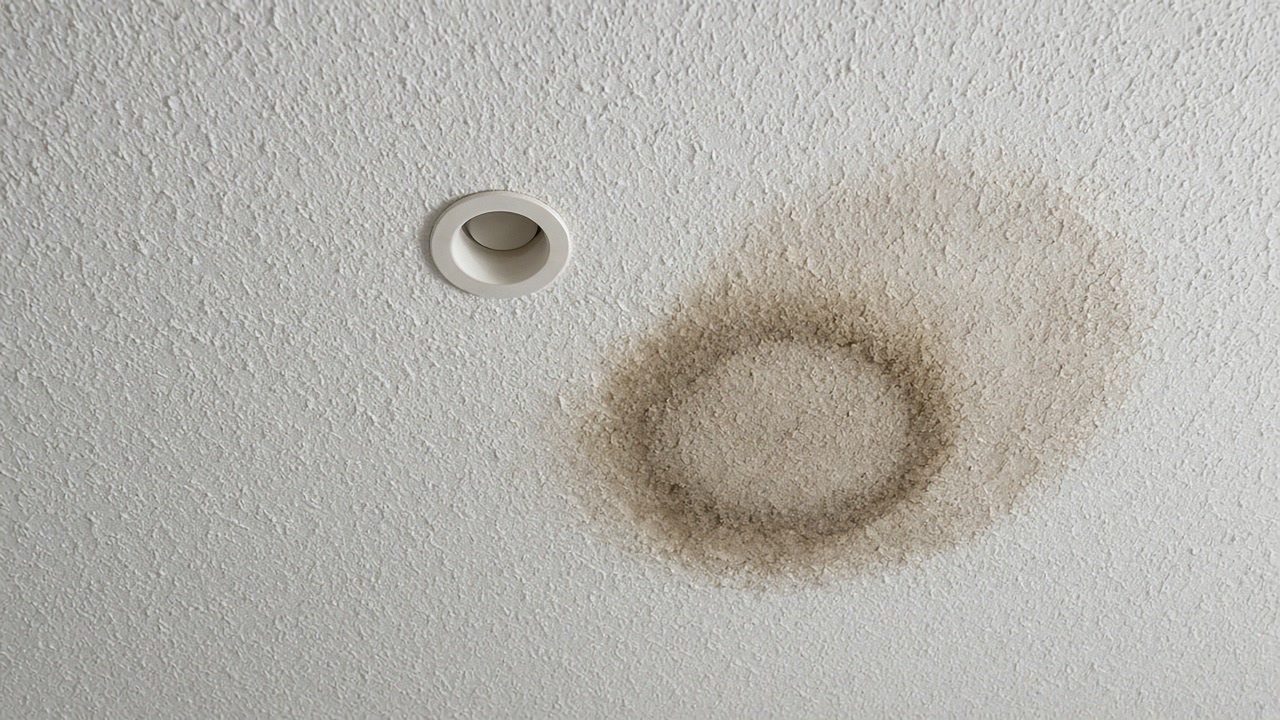
The quickest saving on a visible patch is the test you skip. EPA says that in most cases, if visible mold growth is present, sampling is unnecessary, and that since no EPA or other federal limits have been set for mold or mold spores, sampling cannot be used to check a building's compliance with federal mold standards. A lab report naming what is on your bathroom ceiling rarely changes what happens next. Assessment money is better spent finding the water and the extent of the damage, which is also what Florida's statute says an assessment is for.
Florida's 10 square foot line, and the owner's own exemption
Section 468.8411 defines mold assessment and mold remediation as work on growth of greater than 10 square feet, and section 468.841 exempts a residential property owner who assesses or remediates mold on their own property. EPA puts its line in the same place: if the moldy area is less than about 10 square feet, roughly 3 feet by 3 feet, in most cases you can handle the job yourself. For a small, visible patch in a home you own, the law asks nothing of you, and the job is to fix the water and clean it. Florida does not stop you taking on a larger job in your own home either, though EPA points work with a lot of water damage, or more growth than that, toward professional guidance.
Four Miami-Dade cases where a written assessment pays for itself
The first is a condo dispute. Whether the association or you pays can turn on the cause and on whether it was reported in time under section 718.111(11)(j), so a written finding on the source, from someone working for you, is evidence rather than opinion. The second is a sale, where the other side will want a document rather than your word. The third is an insurance claim, where a fungi limit such as the $10,000 on Citizens' homeowners form makes the scope worth pinning down before anyone starts. The fourth is a hidden source: a smell with nothing visible, a stain that returns after cleaning, or damp at the foot of a block wall, where the job is finding the water and no amount of surface cleaning answers the question.
What section 468.8422 says a Florida mold contract must be
A contract to perform mold assessment or mold remediation in Florida must be a document or electronic record, signed or otherwise authenticated by the parties. The same section says a mold assessment contract is not required to provide estimates for the cost of repair. So expect to sign something before the assessor starts, and do not expect the assessor to price the removal. That is by design, and it is the point at which to collect remediation quotes separately, from companies that did not do the assessment.
What a Florida mold assessment report should cover
Section 468.8411 describes an assessment as an evaluation of the origin, identity, location and extent of the growth, and those four words make a good checklist for the report you are handed. Origin is where the water came from. Identity is what the growth is, which for visible mold is often settled by looking rather than sampling. Location and extent are where it is and how much of it there is, measured, including behind finishes wherever the assessor has looked. A report that names the source and maps the extent is one a remediator can price against, and one that lists spore counts and stops is not. The fee should be fixed in advance, since section 468.8419(1)(h) bars one contingent on the findings.
Why a Florida assessor should not be quoting the removal
Section 468.8419(1)(d) bars an assessor, or the assessor's company, from remediating a structure it assessed within the last 12 months, and (2)(d) bars a remediator from assessing one it remediated. An assessor with nothing to sell you afterward is the whole reason paying for one makes sense. If the person writing your report is also offering to do the work, the licensing guide explains which exception that firm would have to be relying on.
A small, visible patch in a Florida home: the order that works
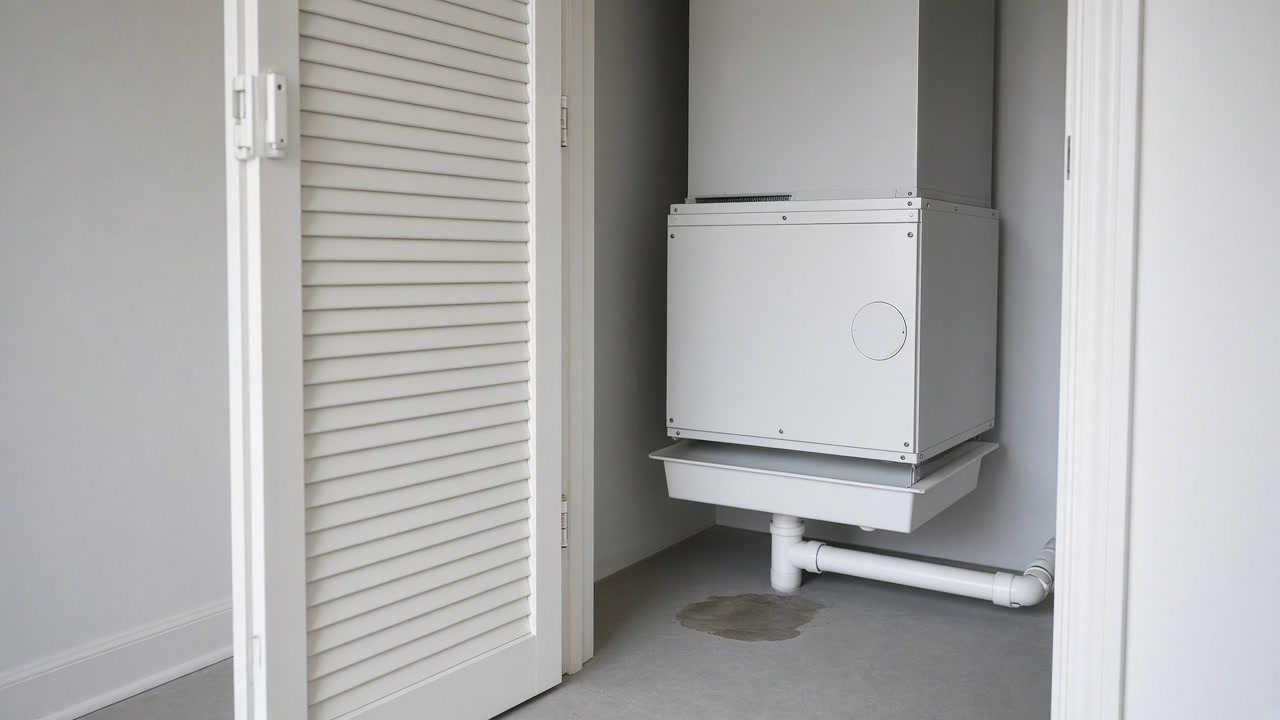
Stop the water first, whether that is the AC drain, a supply line or a window seal. EPA says water-damaged areas and items should be dried within 24 to 48 hours to prevent mold growth, so dry what is wet before you clean anything. Then measure what you can see. Under about 10 square feet in your own home, cleaning it yourself is lawful and is what EPA expects most people to do. If it comes back, spreads past that size, or the water came from somewhere you do not control, describe it in the form, and the reply will say whether it needs an assessor, a remediator or nobody at all.
Sources used in this guide
EPA: 'In most cases, if visible mold growth is present, sampling is unnecessary. Since no EPA or other federal limits have been set for mold or mold spores, sampling cannot be used to check a building's compliance with federal mold standards.'
Source: US Environmental Protection Agency, A Brief Guide to Mold, Moisture and Your Home, accessed 2026-09-23
Florida Statutes section 468.8411 defines both licensed activities by size. A 'mold assessment' is an evaluation of the origin, identity, location and extent of 'mold growth of greater than 10 square feet', and 'mold remediation' is the removal, cleaning, sanitizing, demolition or other treatment 'of mold or mold-contaminated matter of greater than 10 square feet that was not purposely grown at that location.'
Source: The Florida Senate, 2025 Florida Statutes, Chapter 468 Part XVI, section 468.8411 Definitions, accessed 2026-09-23
Section 468.841(1)(a) and (2)(a) exempt from Part XVI 'A residential property owner who performs mold assessment on his or her own property' and one 'who performs mold remediation on his or her own property.'
Source: The Florida Senate, 2025 Florida Statutes, Chapter 468 Part XVI, section 468.841 Exemptions, accessed 2026-09-23
EPA: 'It is important to dry water-damaged areas and items within 24-48 hours to prevent mold growth.' And: 'If the moldy area is less than about 10 square feet (less than roughly a 3 ft. by 3 ft. patch), in most cases, you can handle the job yourself'; where there has been a lot of water damage or growth covers more than 10 square feet, EPA points readers to its guidance for larger buildings.
Source: US Environmental Protection Agency, A Brief Guide to Mold, Moisture and Your Home, accessed 2026-09-23
Section 718.111(11)(j) says association-insured condominium property 'damaged by an insurable event shall be reconstructed, repaired, or replaced as necessary by the association as a common expense', while 'In the absence of an insurable event, the association or the unit owners shall be responsible ... as determined by the maintenance provisions of the declaration or bylaws.' Under (j)4 the association is not obligated to pay 'if the property losses were known or should have been known to a unit owner and were not reported to the association until after the insurance claim of the association for that property was settled or resolved with finality, or denied because it was untimely filed.'
Source: The Florida Senate, 2025 Florida Statutes, Chapter 718 Condominiums, section 718.111(11)(j), accessed 2026-09-23
The Citizens Property Insurance Corporation HO-3 Homeowners coverage worksheet (form dated 11/25) lists 'Limited Fungi, Wet or Dry Rot, or Bacteria Coverage Section I - Property' at a $10,000 limit and answers No to whether it can be added, changed, excluded or increased. The same worksheet lists Water Backup of Sewers and Drains or Sump Overflow as not covered.
Source: Citizens Property Insurance Corporation, HO-3 Coverage Worksheet, Homeowners (11/25), accessed 2026-09-23
Section 468.8422: 'A contract to perform mold assessment or mold remediation shall be in a document or electronic record, signed or otherwise authenticated by the parties. A mold assessment contract is not required to provide estimates related to the cost of repair of an assessed property.'
Source: The Florida Senate, 2025 Florida Statutes, Chapter 468 Part XVI, section 468.8422 Contracts, accessed 2026-09-23
Section 468.8419(1)(e) bars an assessor from inspecting for a fee 'any property in which the assessor or the assessor's company has any financial or transfer interest', and (1)(h) bars accepting an engagement 'in which the assessment itself, or the fee payable for the assessment, is contingent upon the conclusions of the assessment.' Section 468.8419(2)(e) bars a remediator from remediating for a fee a property in which it has a financial or transfer interest.
Source: The Florida Senate, 2025 Florida Statutes, Chapter 468 Part XVI, section 468.8419(1)(e), (1)(h) and (2)(e), accessed 2026-09-23
Section 468.8419(1)(d) says a person may not 'perform or offer to perform any mold remediation to a structure on which the mold assessor or the mold assessor's company provided a mold assessment within the last 12 months.' Section 468.8419(2)(d) is the mirror rule, barring a remediator from assessing a structure it remediated within the last 12 months. Under 468.8419(3) a violation is a second degree misdemeanor the first time, a first degree misdemeanor the second time and a third degree felony after that.
Source: The Florida Senate, 2025 Florida Statutes, Chapter 468 Part XVI, section 468.8419 Prohibitions; penalties, accessed 2026-09-23
Services this guide relates to
Need someone to look at it?
Send the details and we will come back to you.