
Miami-Dade County
Mold Removal in the City of Miami, Starting With Flood or Leak
Tell us what the stain looks like and which floor it is on, and we will say whether a City of Miami home needs an assessor, a remediator, a dry out, or nobody at all. About 42 percent of the city's buildings sit in a mapped FEMA flood zone, so on a ground floor the first question is whether flood water or a leak put it there, because a flood policy sets its own drying rules.
Request a quote in Miami
Tell us what you can see or smell, where it is, and whether it is a condo or a house. Those three answers decide who you need and who is likely responsible, which matters more here than the size of the stain.
Would you rather talk it through? Call (315) 640-3590.
$100 off your first job
Credited by us on your first booked job.
- One credit per customer per property, on your first booked job.
- Valid through December 31, 2026.
Mention this offer when you book. Full terms.
Miami's flood map and rental towers, from the public record

The Local Mitigation Strategy counts 209 residential and 29 commercial repetitive loss properties in the City of Miami in 2024. Of the 147,232 buildings the plan maps in the city, 62,364, about 42 percent, are in FEMA special flood hazard zones A, AE, AH or VE, including 3,864 in the coastal high hazard VE zone.
Source: Miami-Dade County Local Mitigation Strategy, Part 5: NFIP and CRS (September 2025), Tables 8 and 12, accessed 2026-09-23
The City of Miami has 223,826 housing units in the ACS 2020 to 2024 estimates. 48.8 percent are in buildings of 20 or more units and 22.4 percent are single-family detached. 69.2 percent of occupied units are renter occupied. 7.8 percent of units were built in 1939 or earlier and 50.8 percent before 1980.
Source: US Census Bureau, American Community Survey 2020 to 2024 5-year estimates, table DP04 Selected Housing Characteristics, Miami city, Florida, accessed 2026-09-23
The NFIP Standard Flood Insurance Policy Dwelling Form (44 CFR Part 61, Appendix A(1)) does not insure 'Water, moisture, mildew, or mold damage that results primarily from any condition' within the insured's control, including 'Failure to inspect and maintain the property after a flood recedes'. It also excludes loss from 'Power, heating, or cooling failure unless the failure results from direct physical loss by or from flood to power, heating, or cooling equipment on the described location.'
Source: US Government Publishing Office, Code of Federal Regulations, 44 CFR Part 61 Appendix A(1), Dwelling Form (October 1, 2025 edition), accessed 2026-09-23
The Miami-Dade Property Appraiser's folio chart gives each municipality a two-digit code as the first two digits of the folio: 01 Miami, 02 Miami Beach, 03 Coral Gables, 04 Hialeah, 06 North Miami, 08 Opa-locka, 10 Homestead, 24 Key Biscayne, 25 Sweetwater, 28 Aventura, 32 Miami Lakes, 33 Palmetto Bay, 34 Miami Gardens, 35 Doral and 36 Cutler Bay. 'Code 30 indicates properties in Miami-Dade County not within the municipality, otherwise referred to as unincorporated.' Kendall does not appear on the list.
Source: Miami-Dade County Property Appraiser, Folio Numbers, accessed 2026-09-23
Ground floor, or several floors up?
A ground-floor stain after rain points one way and a ceiling stain under another unit points another. Tell us which you have in Miami, and whether you rent or own.
Flood water or a leak on a City of Miami ground floor
A Miami mailing address is not the same thing as the City of Miami. Only folios beginning 01 are permitted by the City's own building department, and a folio beginning 30 goes to the county, so look yours up on the Property Appraiser's site before anyone files. Inside the city, four in ten mapped buildings are in flood zones A, AE, AH or VE, and 3,864 sit in the coastal VE zone. That matters for mold because the federal flood policy does not cover mold that results from failing to inspect and maintain the property after a flood recedes, so the drying clock is yours from the moment the water leaves. About seven in ten City of Miami households rent and nearly half of all units are in buildings of 20 or more, so a tenant's first move is a written report to the landlord, who brings in the association where there is one.
Assessment, removal and drying inside Miami city limits
Mold Assessment and Water Source Report
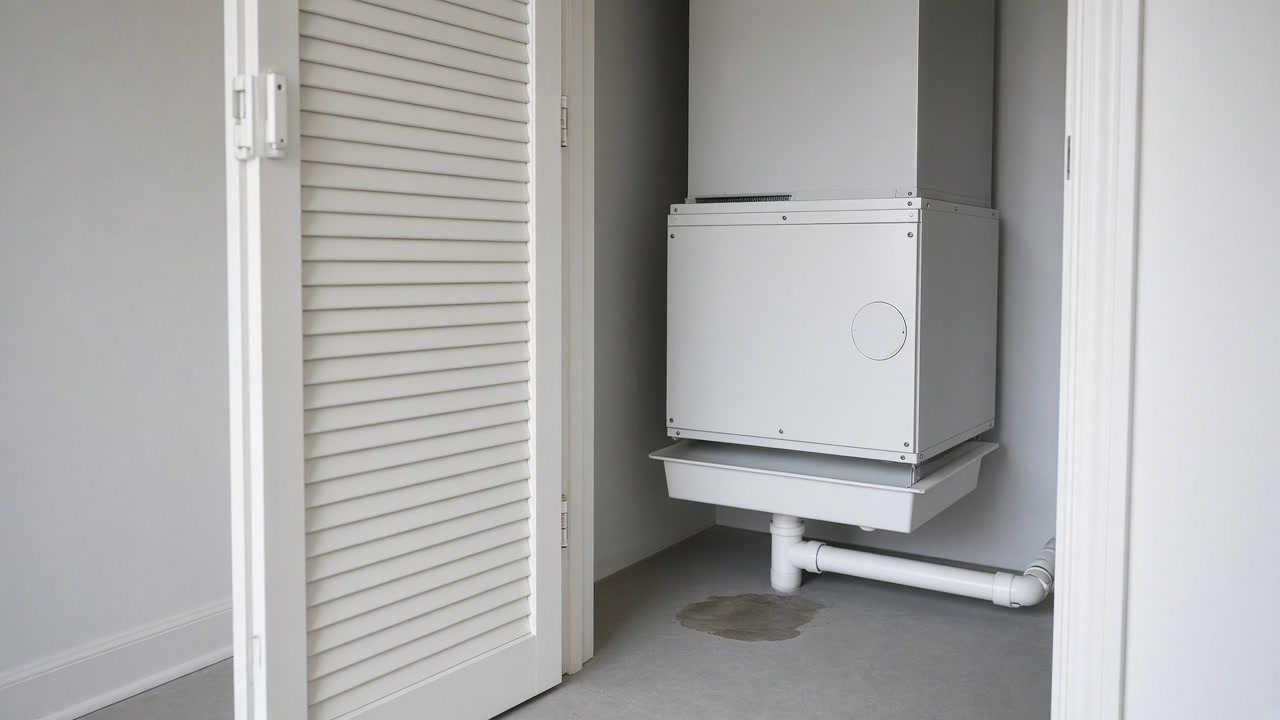
You found a dark edge in the AC closet, a ring on the ceiling under the unit above, or a smell waiting at the door after the summer, and you want to know what it is, whose water fed it and how big the job is, from a licensed assessor who will not be the one removing it.
Mold Assessment in Miami →Mold Remediation and Removal
The drywall beside the air handler has gone soft, or the ceiling stained again after the unit above fixed its leak, and you want the growth taken out properly by a licensed remediator working to someone else's report, not to a bigger one of its own.
Mold Remediation in Miami →Water Damage Drying and Dry Out
Water came through the ceiling from the unit above, the AC drain backed up into the closet, or the power was off for days, and you want the place measured and dried before a leak turns into a mold job.
Water Damage Drying in Miami →Send the Miami details once
A person reads it and writes back with what the job needs and who should be involved, landlord and association included. Nobody asks you to sign anything about your insurance.