
Miami-Dade County, from Aventura to Homestead
Miami-Dade Mold Removal: Know Whose Job It Is Before Anyone Opens a Wall
Tell us what you can see, where the water came from, and whether it is a condo or a house, and you get a straight answer on who this job belongs to: a licensed assessor, a remediator, a dry out, the association, or nobody at all. Florida licenses the people who find mold and the people who remove it separately, and we keep those two jobs with different companies at every size. The work itself goes to vetted local contractors who are licensed and insured for it, and nobody asks you to sign your insurance over.
Request a Quote
Tell us what you can see or smell, where it is, and whether it is a condo or a house. Those three answers decide who you need and who is likely responsible, which matters more here than the size of the stain.
Would you rather talk it through? Call (315) 640-3590.
$100 off your first job
Credited by us on your first booked job.
- One credit per customer per property, on your first booked job.
- Valid through December 31, 2026.
Mention this offer when you book. Full terms.
Three separate jobs, and in Florida the finder does not remove
Assessment, remediation or a dry out: the right one depends on whether anything is still wet and whether anyone has found the source yet. Water caught inside a day or two is usually a drying job, and EPA guidance puts the window at 24 to 48 hours. After that, a licensed mold assessor maps the source and the extent, and a licensed mold remediator who did not write that report removes what it names. Florida licenses both and bars one company from doing both on the same structure within 12 months.
Mold Assessment and Water Source Report
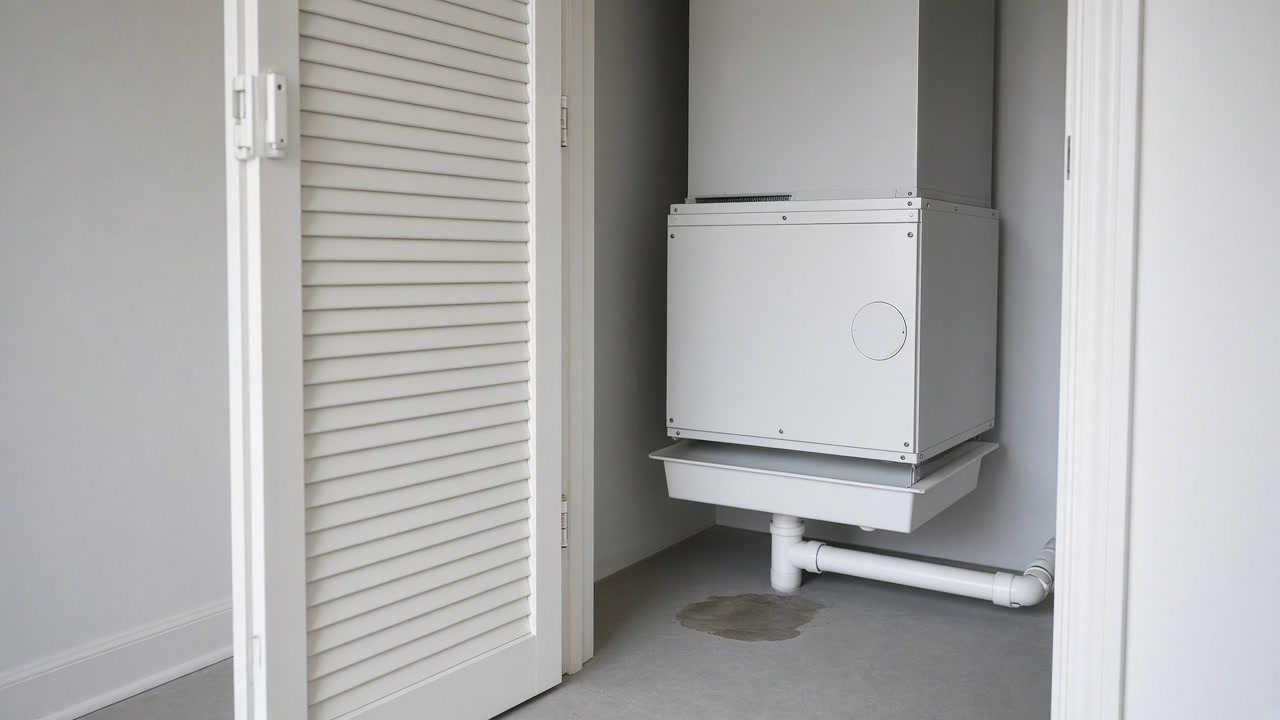
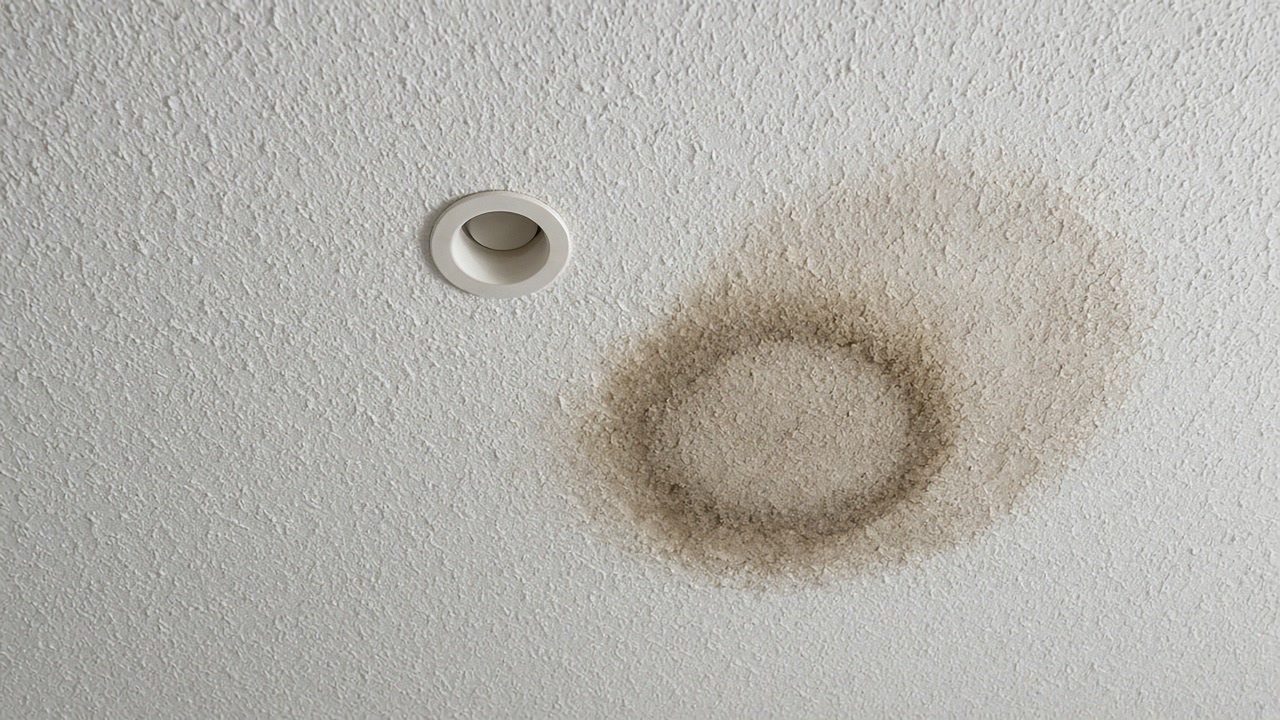
You found a dark edge in the AC closet, a ring on the ceiling under the unit above, or a smell waiting at the door after the summer, and you want to know what it is, whose water fed it and how big the job is, from a licensed assessor who will not be the one removing it.
Start here if you can see or smell mold and nobody independent has put in writing where the water came from.
About Mold Assessment →Mold Remediation and Removal
The drywall beside the air handler has gone soft, or the ceiling stained again after the unit above fixed its leak, and you want the growth taken out properly by a licensed remediator working to someone else's report, not to a bigger one of its own.
Start here if a written protocol says material has to come out, and the water that caused it has been stopped.
About Mold Remediation →Water Damage Drying and Dry Out
Water came through the ceiling from the unit above, the AC drain backed up into the closet, or the power was off for days, and you want the place measured and dried before a leak turns into a mold job.
Start here if something got wet in the last two days, or is still wet now.
About Water Damage Drying →Find out who this job actually belongs to
Describe what you are looking at. The reply says whether it needs a licensed assessor, a remediator, a dry out, or nobody at all, and whether the association should be in the room.
How a Miami-Dade mold job is arranged here
Work out whose problem it is, get the source and the extent in writing from a company with no stake in the removal, then price the removal against that report.
Describe the building, the stain and the water
Six short questions and the property address. The written reply tells you whether this looks like a dry out, an assessment, a removal or nothing, and whether the association should be told before anyone touches it.
A licensed assessor finds the source and the extent
If anything is still wet, drying comes first: EPA guidance is to dry within 24 to 48 hours. Past that, an assessor puts the water source and the affected area in writing, and Florida bars that assessor's fee from depending on what it finds.
A different company quotes the removal
The remediator prices the work against a report it did not write, under a signed contract with you. In a condominium, the board's written consent may be needed before reconstruction inside a unit begins.
What makes this a local problem
Section 718.111(11)(f)3 says the association's property policy must exclude 'all personal property within the unit or limited common elements, and floor, wall, and ceiling coverings, electrical fixtures, appliances, water heaters, water filters, built-in cabinets and countertops, and window treatments' located within the unit and serving only it. 'Such property and any insurance thereupon is the responsibility of the unit owner.'
Source: The Florida Senate, 2025 Florida Statutes, Chapter 718 Condominiums, section 718.111(11)(f), accessed 2026-09-23
The Citizens HO-6 Condominium Unit Owners coverage worksheet (form dated 08/26) lists Limited Fungi, Wet or Dry Rot, or Bacteria Coverage for Section I property at a $10,000 limit, Loss Assessment at a $2,000 limit, and Water Backup of Sewers and Drains or Sump Overflow as not covered.
Source: Citizens Property Insurance Corporation, HO-6 Coverage Worksheet, Condominium Unit Owners (08/26), accessed 2026-09-23
EPA's mold course says one function of a building's heating, ventilation and air conditioning system 'is to remove moisture from the air before the air is distributed throughout the building', and that if the system is turned off during or shortly after heavy water use, 'the humidity may rise greatly, and moisture or mold problems may develop.' It also says wet buildings and materials must be dried 'within 24-48 hours' to avoid mold growth.
Source: US Environmental Protection Agency, Mold Course Chapter 2: Investigating, Evaluating, and Remediating Moisture and Mold Problems, accessed 2026-09-23
At Miami International Airport the mean dew point over a 40-year period of record, in degrees F, is: January 60.4, February 62.2, March 63.2, April 65.8, May 69.9, June 74.2, July 75.1, August 75.6, September 75.0, October 71.3, November 66.8, December 63.0, with an annual mean of 68.5.
Source: NOAA National Centers for Environmental Information, 2023 Local Climatological Data Annual Summary with Comparative Data, MIAMI, FLORIDA (KMIA), WBAN 12839, accessed 2026-09-23
Florida keeps the finding and the removal apart, and the rule has a door in it
You want the company that measures the mold to have no stake in how much of it there is. Florida writes that into law. Section 468.8419 bars a mold assessor from remediating a structure it assessed within the last 12 months, and bars a remediator from assessing one it remediated.
The same section exempts a contractor holding a statewide license as a general, building or residential contractor, the group section 489.105(3) calls Division I. That contractor may assess your ceiling and then bid to replace it. The statute lets the state require the contract to tell you that you can ask for competing bids; the state's mold rules contain no rule titled as one.
We do not use that door. The assessment and the removal go to different companies on every job, whatever its size, so the removal is priced against a report written by somebody who is not bidding on it. If anyone offers you both under the exception, ask for competing bids in writing.

What we do differently from a one-stop mold company
Two companies on every job, exception or not
Florida lets a general, building or residential contractor with a statewide license both assess and remediate. We never arrange it that way, at any size, so the finding and the bill come from different hands.
The first reply says where the line probably falls
In a condominium, section 718.111(11)(f)3 leaves floor, wall and ceiling coverings inside your unit to you and your insurance. The first reply points to which side of that line the damage likely sits on, and the association's own documents settle it.
Nobody asks for your insurance benefits
For residential policies issued from January 1, 2023, section 627.7152(13) makes an assignment of post-loss benefits void. Nothing arranged through this site asks you to sign one.
A plain answer when you need no one
Florida's mold licenses only reach growth larger than 10 square feet. When what you describe is smaller and the water has stopped, you are told how to deal with it yourself.
Coverage across Miami-Dade County, from Aventura to Homestead
Before you let anyone open a wall
It is only a small patch. Do I need anyone at all?
Probably not. Florida defines both mold assessment and mold remediation as work on growth larger than 10 square feet, so below that no license is involved, and EPA says a patch under roughly 3 feet by 3 feet is in most cases something you can clean up yourself. What matters is the water behind it: a blocked AC drain line or an overflowing drip pan will grow it back. If that is what you describe, that is the answer you get.
Should I pay for a mold test to prove it is mold?
Usually not. EPA says that where mold is visible, sampling is in most cases unnecessary, and because no federal limits exist for mold or spores, a test result cannot show a home passes or fails anything. Money is better spent finding the water. An assessment is worth paying for when you cannot see the extent, when the source is in dispute, or when an association or insurer will want it in writing.
We were away all summer and the place smells musty. Is it mold?
Not necessarily. EPA notes that when the air conditioning is off, indoor humidity can rise sharply, and at Miami International the mean dew point stays above 74F from June through September. Run the AC, check the humidity with a meter, which EPA says costs $10 to $50, and aim below 60 percent. If the smell fades and nothing is growing, you may need nobody. If it stays, or you can see growth, send the form.
The stain is under the unit above. Is it mine or the association's?
It depends on what failed and what your declaration says. Section 718.111(11)(f)3 makes floor, wall and ceiling coverings inside your unit your responsibility and your insurance's, and section 718.111(11)(j) ties the rest to whether there was an insurable event and to the declaration's maintenance provisions. Report it to the association in writing now: under (j)4 a loss you knew about and reported late can leave the association with nothing to pay.
The company that inspected it offered to remove it. Is that allowed?
Generally not within 12 months. Section 468.8419 bars a mold assessor from remediating a structure it assessed in that time. The exception is a contractor with a statewide general, building or residential license, and if that is who is offering both, ask for competing bids in writing. We keep the two apart on every job either way.
Will my insurance pay for the mold, and should I sign anything?
We cannot say what your policy pays, and nobody here will try. Citizens' own homeowners and condo unit owner forms set their limited fungi coverage at $10,000; read your declarations for the fungi limit on yours. As for signing: for residential policies issued from January 1, 2023, section 627.7152(13) makes an assignment of post-loss benefits void, so nobody should ask you to sign your claim over.
Send it once and get a straight answer
Every request is read by someone here who answers it in writing. Sending it commits you to nothing, nobody asks you to sign anything about your insurance, and nobody rings you with a sales pitch.