
Miami-Dade County
Mold Removal in North Miami's Older Homes and Condo Buildings
In an older North Miami home or condo, we can tell you whether the stain is a building fault or a unit fault, and who should hire the assessor. Four in five North Miami homes were built before 1980, the highest share of any town we cover, and many sit in the kind of multi-story buildings that go through the county's recertification and the state's milestone inspection.
Request a quote in North Miami
Tell us what you can see or smell, where it is, and whether it is a condo or a house. Those three answers decide who you need and who is likely responsible, which matters more here than the size of the stain.
Would you rather talk it through? Call (315) 640-3590.
$100 off your first job
Credited by us on your first booked job.
- One credit per customer per property, on your first booked job.
- Valid through December 31, 2026.
Mention this offer when you book. Full terms.
North Miami recertification and what it does not check
This page covers the City of North Miami, folio code 06, which issues its own permits. Here 79.5 percent of units predate 1980, 36.9 percent predate 1960, and 43.5 percent are in buildings of 20 or more units. Condo buildings of three stories or more go through Miami-Dade's recertification and Florida's milestone inspection, and both are structural reviews by an engineer or architect, not moisture checks. The state statute says signs of leakage or peeling finishes are not by themselves substantial structural deterioration, so a building that passed can still be letting water into units. Read the summary the association must send owners within 45 days of the milestone report for anything about water, then ask your assessor to check the age of the supply lines, drains and windows that serve your unit.
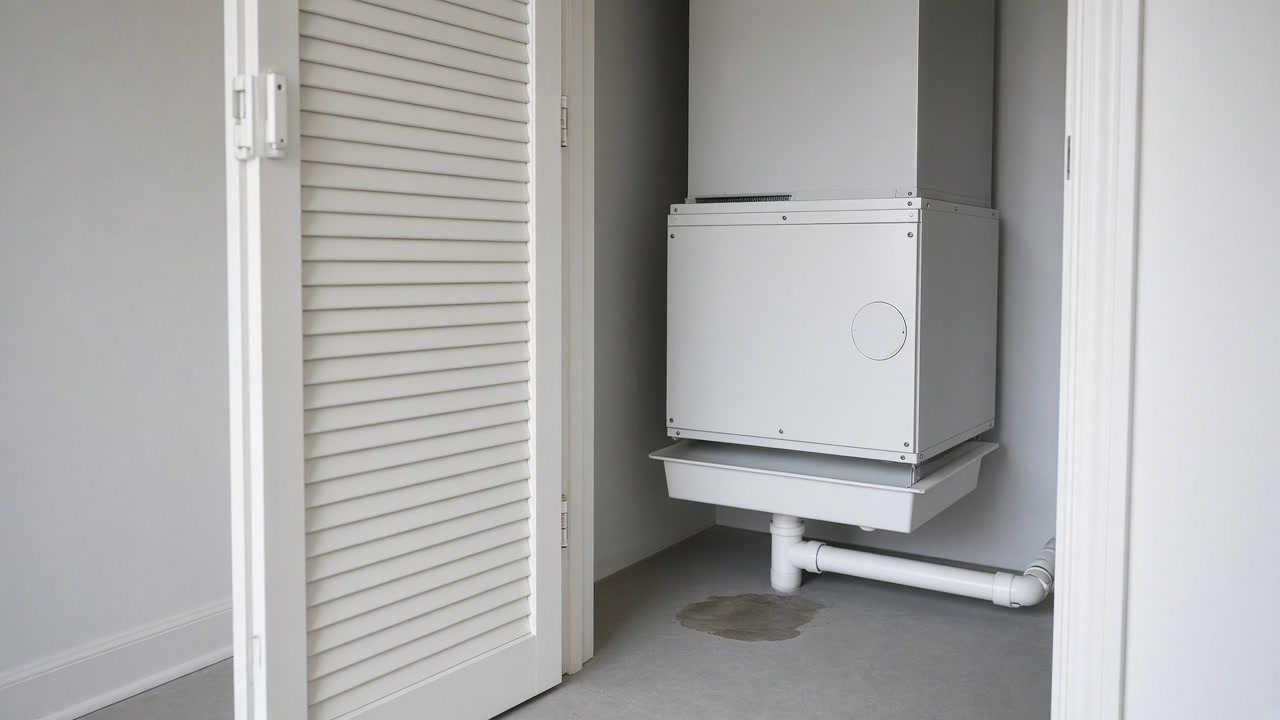
Is it the North Miami building, or your unit?
A stain at a window and a stain under the unit above point to different people. Tell us where it is and whether the building has an association.
Assessment and removal for North Miami units and houses
Mold Assessment and Water Source Report
You found a dark edge in the AC closet, a ring on the ceiling under the unit above, or a smell waiting at the door after the summer, and you want to know what it is, whose water fed it and how big the job is, from a licensed assessor who will not be the one removing it.
Mold Assessment in North Miami →Mold Remediation and Removal
The drywall beside the air handler has gone soft, or the ceiling stained again after the unit above fixed its leak, and you want the growth taken out properly by a licensed remediator working to someone else's report, not to a bigger one of its own.
Mold Remediation in North Miami →North Miami housing age and building inspections, sourced

North Miami has 21,956 housing units in the ACS 2020 to 2024 estimates. 79.5 percent were built before 1980, the highest share among the places on this site, and 36.9 percent before 1960. 43.5 percent are in buildings of 20 or more units and 56.5 percent of occupied units are renter occupied.
Source: US Census Bureau, American Community Survey 2020 to 2024 5-year estimates, table DP04 Selected Housing Characteristics, North Miami city, Florida, accessed 2026-09-23
Miami-Dade County has run a building recertification program since 1975, amended June 1, 2022. Condominium and cooperative buildings three stories or taller within three miles of the coastline and built on or after 1998 must be recertified at 25 years and every 10 years after; other buildings built on or after 1993 at 30 years; coastal condo and co-op buildings built 1983 to 1997, and other buildings built 1983 to 1992, were due by December 31, 2024. Single-family homes, duplexes, and buildings with an occupant load of 10 or less and 2,000 square feet or less do not go through recertification.
Source: Miami-Dade County Regulatory and Economic Resources, Building Recertification, accessed 2026-09-23
Section 553.899(3) requires a milestone structural inspection of a condominium or cooperative building three or more habitable stories tall by December 31 of the year it reaches 30 years from its certificate of occupancy, and every 10 years after; the local enforcement agency may require it at 25 years for local conditions such as proximity to salt water. Section 553.899(2)(b) says 'substantial structural deterioration' does not include surface imperfections such as 'signs of leakage, or peeling of finishes' unless the engineer or architect finds them to be a sign of it. Within 45 days of receiving the report, (9) requires the association to send each unit owner the inspector-prepared summary.
Source: The Florida Senate, 2025 Florida Statutes, Chapter 553, section 553.899 Mandatory structural inspections for condominium and cooperative buildings, accessed 2026-09-23
The Local Mitigation Strategy counts 53 residential repetitive loss properties in North Miami in 2024. Of 17,298 buildings mapped in the city, 8,718, about 50 percent, are in flood zones AE or VE, including 139 in the coastal VE zone.
Source: Miami-Dade County Local Mitigation Strategy, Part 5: NFIP and CRS (September 2025), Tables 8 and 12, accessed 2026-09-23
Send the North Miami stain and the building details
A person reads it and replies with who should be told and what the assessor should look at first. Sending it is not a commitment.