
Why a Florida General Contractor May Both Assess and Remove Mold
Because both of Florida's 12-month bars in section 468.8419 exempt a Division I contractor, which section 489.105(3) defines as a general, building or residential contractor, and the exemption is written for a certificate holder, which on DBPR's coding appears to mean a statewide C code rather than a local R registration. If one firm offers to do both on your home, check that its license code starts with C and get at least one competing remediation bid in writing.
Already know you need someone out? Call (315) 640-3590.
Checking a combined offer from one Florida contractor
Look up the license
You, on myfloridalicense.comA general, building or residential license, with an occupation code that starts with C.
Get a second remediation price
A remediator who did not do the assessmentIn writing, against the same scope, so the two numbers can be compared line by line.
Sign only a written contract
You and the contractorSection 468.8422 requires a signed document or electronic record for mold assessment and remediation work.
Have the finished work checked by someone else
An assessor who did not do the removalWorth it whenever a buyer, a condo board or an insurer will read the result.
None of this accuses anyone. It is the same checking you would do on any large quote, applied to the one case where Florida lets a single firm hold both halves.
Who counts as Division I under Florida section 489.105(3)
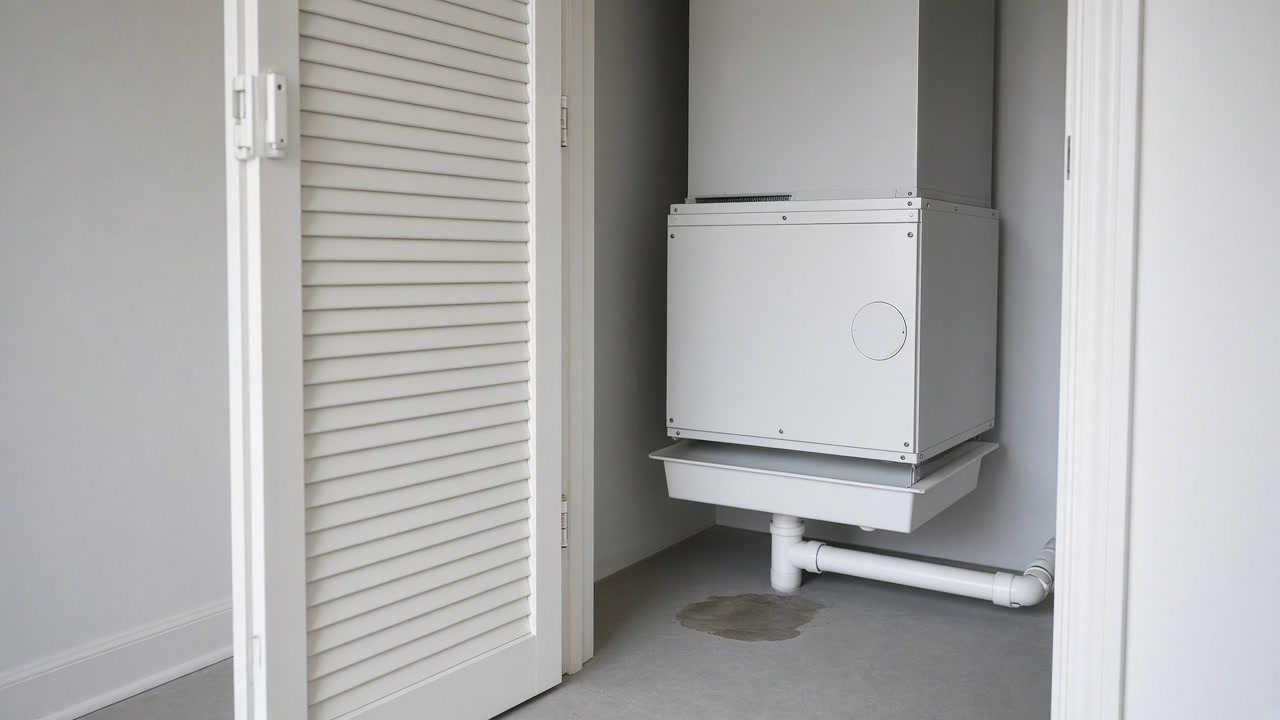
Florida sorts construction contractors into two divisions. Division I is paragraphs (a) to (c) of section 489.105(3): general contractors, building contractors and residential contractors. Division II is everyone in paragraphs (d) to (q), including sheet metal, roofing, the Class A, B and C air-conditioning contractors, mechanical, pool and spa, plumbing, solar and specialty contractors. Only the first group sits inside the mold statute's exception. So if the firm that found mold in your AC closet is an air-conditioning contractor, or the plumber who opened the wall under your kitchen sink, the Division I exception does not reach it. Section 468.841 does exempt it from the mold statute while it works within its own license, but once it offers itself for hire as a mold assessor or remediator it needs the mold license, and the 12-month bar applies.
A Florida license code that starts with C, not R
The Department of Business and Professional Regulation says contractors holding a statewide certificate of competency, who may contract anywhere in Florida, carry an occupation code beginning with C. Registered contractors, who may contract only in the local jurisdictions where they registered, carry a code beginning with R. For the three Division I trades that means CG or RG, CB or RB, and CR or RR. The mold statute's exception is written for the holder of the state certificate, so a firm with only a local R registration does not appear to qualify. That is our reading of the statute rather than a department ruling, which is one more reason to look the license up yourself instead of relying on anyone's description of it.
The competitive-bids disclosure the law lets the Florida department require
The statute does not leave the exception bare. It says the department may adopt rules requiring that, when a Division I contractor performs the assessment and offers to remediate, or the reverse, the contract discloses the homeowner's right to request competitive bids. The word is may. Chapter 61-31 of the Florida Administrative Code, the rule chapter for mold-related services, lists twelve rules covering license requirements, examination, renewal, continuing education, discipline, citations and mediation, and none is titled as a competitive-bids disclosure. We did not find one, and we hold that finding with medium confidence rather than certainty. Either way the practical step is the same: do not wait for a contract to tell you that you may shop around.
Four things to ask a Florida contractor who offers to do both
Ask for the license number, and check on myfloridalicense.com that it is a general, building or residential license with a code beginning with C. Ask for at least one other remediation price, in writing, from a company that did not do the assessment. Ask for the contract as a signed document or electronic record, which section 468.8422 requires for any mold assessment or remediation contract. And if a buyer, a condo board or an insurer will read the outcome, ask who will check the finished work, because a clearance from the firm that did the removal tells a third party less than one from somebody who did not.
The Division I exception is lawful, and a second bid still pays
Nothing here suggests a general contractor who both scopes and removes mold is doing anything wrong. The legislature wrote the exception, and a contractor who can open a wall, take out the damaged material and rebuild it may be a sensible choice for a job that is mostly construction. The reason the rest of Part XVI keeps the halves apart is that the person who defines the scope is also the person paid to carry it out. The exception lifts the bar. It does not remove that incentive. A second written bid against the same scope is the inexpensive way to learn whether the job in front of you is the job, or more than the job.
How we treat the Division I exception on a Miami-Dade job
We do not rely on it. When a request needs both an assessment and a removal, the two go to different licensed companies, whatever the size of the job and whatever the contractor's license would allow. If you already hold a combined offer and want a second price to set against it, say so in the form.
Sources used in this guide
Section 468.8419(1)(d) says a person may not 'perform or offer to perform any mold remediation to a structure on which the mold assessor or the mold assessor's company provided a mold assessment within the last 12 months.' Section 468.8419(2)(d) is the mirror rule, barring a remediator from assessing a structure it remediated within the last 12 months. Under 468.8419(3) a violation is a second degree misdemeanor the first time, a first degree misdemeanor the second time and a third degree felony after that.
Source: The Florida Senate, 2025 Florida Statutes, Chapter 468 Part XVI, section 468.8419 Prohibitions; penalties, accessed 2026-09-23
Section 489.105(3) splits contractors into two divisions. Division I consists of paragraphs (a) to (c): general contractors, building contractors and residential contractors. Division II consists of paragraphs (d) to (q), including sheet metal, roofing, Class A, B and C air-conditioning, mechanical, pool and spa, plumbing, solar and specialty contractors.
Source: The Florida Senate, 2025 Florida Statutes, Chapter 489 Part I, section 489.105(3) Definitions, accessed 2026-09-23
The Florida Department of Business and Professional Regulation says contractors who hold a statewide certificate of competency, and may contract in any jurisdiction in the state, are designated by an occupation code beginning with the letter C. Registered contractors, who may contract only in the local jurisdictions where they registered, carry a code beginning with R. General, building and residential contractors are listed as CG and RG, CB and RB, and CR and RR.
Source: Florida Department of Business and Professional Regulation, Construction Industry Licensing Board page, accessed 2026-09-23
The Florida Administrative Code chapter for mold-related services, 61-31, lists twelve rules: license requirements, examination, delinquent license, inactive and active status, license renewal, hardship reinstatement of null or void licenses, continuing education provider requirements, approval of continuing education courses, disciplinary guidelines, notice of noncompliance, citations and mediation. None is titled as a competitive bids disclosure rule, although section 468.8419 lets the department adopt one.
Source: Florida Department of State, Florida Administrative Code and Register, Chapter 61-31 Mold-Related Services, accessed 2026-09-23
Section 468.8422: 'A contract to perform mold assessment or mold remediation shall be in a document or electronic record, signed or otherwise authenticated by the parties. A mold assessment contract is not required to provide estimates related to the cost of repair of an assessed property.'
Source: The Florida Senate, 2025 Florida Statutes, Chapter 468 Part XVI, section 468.8422 Contracts, accessed 2026-09-23
The Florida Department of Business and Professional Regulation is responsible for licensing and regulating mold assessors and mold remediators, under two license types: Mold Assessor (MRSA) and Mold Remediator (MRSR). The department's Division of Regulation handles complaint analysis and investigations.
Source: Florida Department of Business and Professional Regulation, Mold-Related Services, accessed 2026-09-23
Services this guide relates to
Need someone to look at it?
Send the details and we will come back to you.